

From October 9–11, seventeen entrepreneurs gathered in Fort Lauderdale for an intensive three-day workshop on buying small businesses. These weren’t beginners—they were all deep in the process of acquiring companies valued between $500K and $5M.
Each participant brought active deals, specific questions, and months of search experience. This event wasn’t about learning the basics—it was about solving the real challenges that come up when you’re negotiating, structuring, and closing actual deals.
Who Attended (and Why)
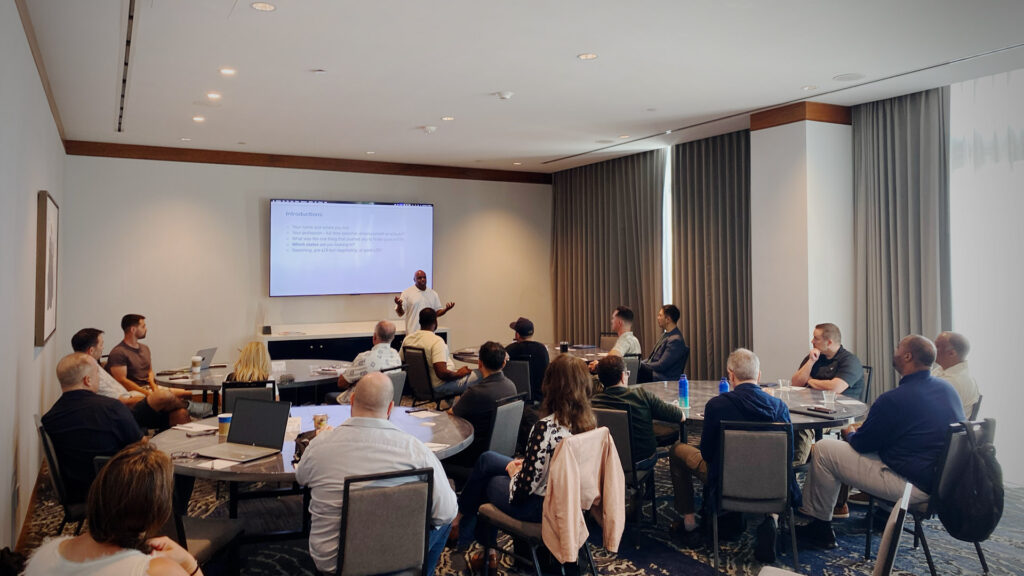
Every attendee was hand-selected from Acquira’s Accelerator Program because they were actively working on a deal—negotiating with sellers, performing due diligence, or finalizing financing.
That’s what made this group so engaged. Everyone in the room had skin in the game and came ready to dive into advanced topics like:
- Quality of Earnings (QOE) analysis
- Deal structuring nuances
- Post-acquisition operations
Each session was designed for people facing these exact situations right now—not someday in the future.
Day One: Learning From Someone Who Just Closed Two Deals
The workshop kicked off with participants introducing themselves—where they’re at in the buying process, how long they’ve been searching, and what led them to pursue acquisition entrepreneurship in the first place.
Then, Alec Walsh joined as the featured guest. Alec had just closed two jewelry business acquisitions—one financed through the SBA and another entirely through seller financing.
He shared his real-world experience—how he sourced deals, structured offers, and why creative financing opened doors that traditional loans couldn’t. For many in the room, Alec’s story provided a current, practical roadmap of what actually works in today’s market.
From Search to Offer: Turning Targets Into LOIs
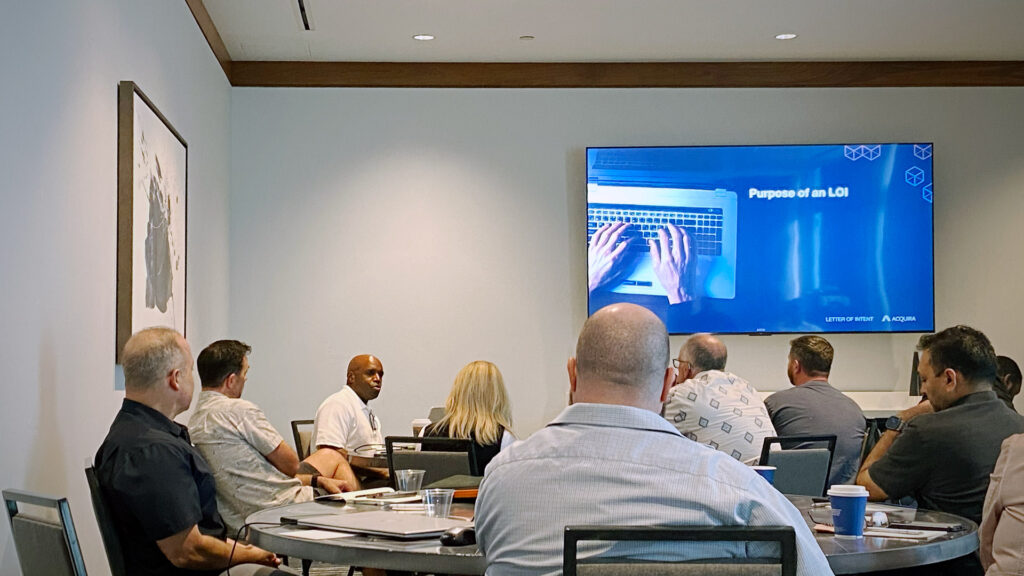
The first afternoon focused on one of the toughest transitions: moving from an identified target to a signed Letter of Intent (LOI).
Rich Coppage and Alec Walsh led sessions on how to:
- Find and evaluate targets efficiently
- Negotiate from a position of strength
- Position yourself as the buyer a seller actually wants to work with
With SBA lending getting tighter, the discussion on seller financing was especially valuable. Participants learned how creative deal structures can make more deals possible—without being limited by traditional bank financing.
Getting the Money: SBA Financing and Due Diligence
Javier Jorge from Locality Bank gave attendees an inside look at how SBA lenders really think. He explained:
- What lenders look for in an application
- What red flags can kill a deal in underwriting
- How to avoid wasting time on financing packages that will never get approved
He also shared a framework for smart due diligence—how to confirm the important details before spending thousands on unnecessary reports.
The day wrapped up with sessions on tax structuring and relocation planning. These topics might not sound exciting, but getting them wrong can cost you six figures down the line.
Evening Networking
Locality Bank sponsored dinner at Sixty Vines, giving everyone time to relax and connect. Three participants, all working on seller-financed deals, spent hours comparing notes on what worked (and what didn’t) in their negotiations.
Often, it’s these informal conversations that deliver the most practical insights.
Day Two: Understanding What You’re Actually Buying
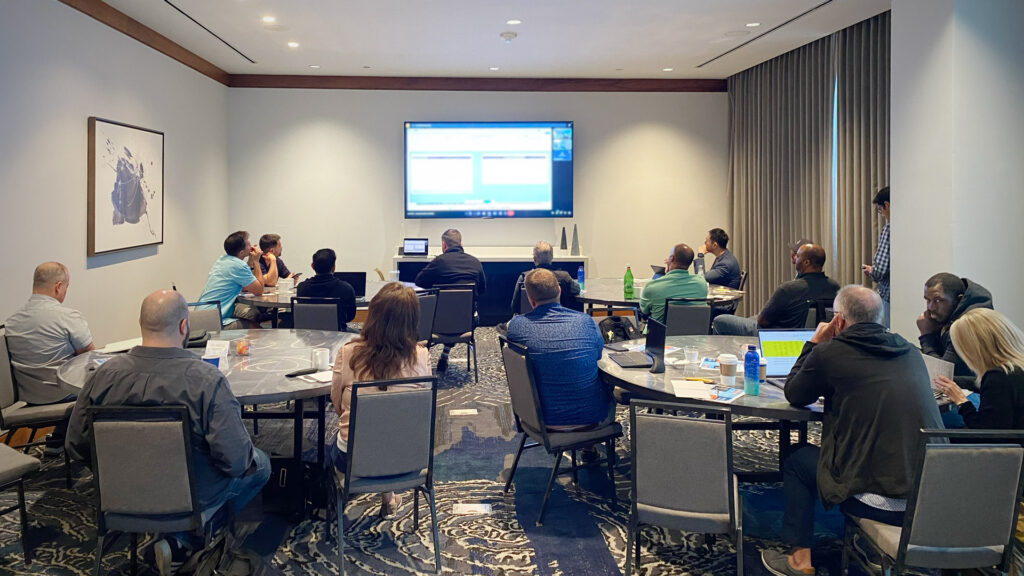
Day two began with a complete deal cycle walkthrough—the real-world problems that pop up during diligence.
We covered issues like:
- Financials that don’t match tax returns
- Key employees planning to leave
- Customer concentration risks
The goal was to understand when these problems are deal-breakers versus negotiable challenges.
Quality of Earnings: Seeing the Story Behind the Numbers
Avnit Sekhon from Treewalk walked through actual QOE reports to show what real red flags look like—and what’s just normal variation.
His experience across hundreds of deals gave him the pattern recognition to help participants tell the difference.
A key takeaway: Poor communication between sellers and accountants often creates unnecessary tension during diligence. Catching issues early keeps deals from falling apart.
Deal Structuring: Stock vs. Asset Sale
Rich Coppage broke down the stock vs. asset sale decision—a seemingly small detail that can impact taxes, liabilities, and negotiation leverage.
Most sellers prefer stock sales. Most buyers prefer asset sales. Understanding why helps you structure a deal that protects your interests without killing the transaction.
After the Closing: The Real Work Begins
Once the deal is done, the real work starts.
Post-acquisition sessions covered how to:
- Step into leadership effectively
- Implement systems and process improvements
- Increase margins through pricing or expansion
We also looked at real examples of businesses that grew significantly under new ownership—and the specific actions that made that possible.
Live Deal Reviews: Real Feedback on Real Deals
Every participant presented a real deal from their pipeline for group feedback.
One entrepreneur shared a $1.8M landscaping business that looked strong—until the group identified that three customers made up 68% of its revenue, with contracts expiring right after closing. That insight completely changed the risk profile.
Another presented a $750K HVAC business and got validation on the structure, plus actionable ideas for increasing EBITDA by 20% within 90 days.
These weren’t theoretical exercises—each participant walked away with specific, informed next steps for their own deals.
Dinner that evening, sponsored by Treewalk at Boatyard, turned into another round of deep deal discussions and new peer connections.
Day Three: Seeing It In Action
On the final day, Kevin Couper opened the doors to Kyle Plumbing, a business he acquired through Acquira.
Walking through a real operating business gave participants a rare look at what ownership actually looks like—the trucks, the team, the systems, and the leadership required to keep it all running.
Kevin shared his transition story:
How he went from an unrelated 9–5 career to running a home services company, how he retained key employees, and how he built a strong culture as a new owner.
For many participants, this visit made the entire process tangible. This is what you’re buying—not just numbers on a spreadsheet, but a real business with real people and real responsibility.
What These 17 Entrepreneurs Left With
By the end of the workshop, participants walked away with three major things:
- Expert feedback on their actual deals – from people who’ve closed hundreds of transactions.
- Actionable frameworks for the next 90 days – for structuring offers, managing diligence, securing financing, and planning post-close improvements.
- A peer network at the same stage – a group of fellow buyers they can rely on for advice, accountability, and deal flow support.
For many, that peer network will prove more valuable than any single session.
Want to Be Part of the Next Workshop?
This workshop isn’t open to the public—it’s one of the exclusive benefits available to entrepreneurs in Acquira’s Accelerator Program.
Every attendee you’ve read about has been in the Accelerator for months, actively working on real deals. That’s what makes the discussions so valuable and focused.
If you’re serious about buying a small business and want access to this kind of hands-on guidance, expert feedback, and peer support, your first step is to apply to join Acquira’s Accelerator Program.
Once you’re in the program and working on a deal, you could be invited to attend a future workshop and experience this level of collaboration and insight firsthand.
Apply to join Acquira’s Accelerator Program today and take your first step toward owning a business of your own.


Acquira specializes in seamless business succession and acquisition. We guide entrepreneurs in acquiring businesses and investing in their growth and success. Our focus is on creating a lasting, positive impact for owners, employees, and the community through each transition.